The average lifespan of an ISO (Independent Sales Organization) is roughly 18 months. They burn bright, flood lenders with trash files, get cut off, and disappear.
So, when a shop like Advance Funds Network (AFN) hits the 18-year mark, it’s not an accident. It’s operational discipline.
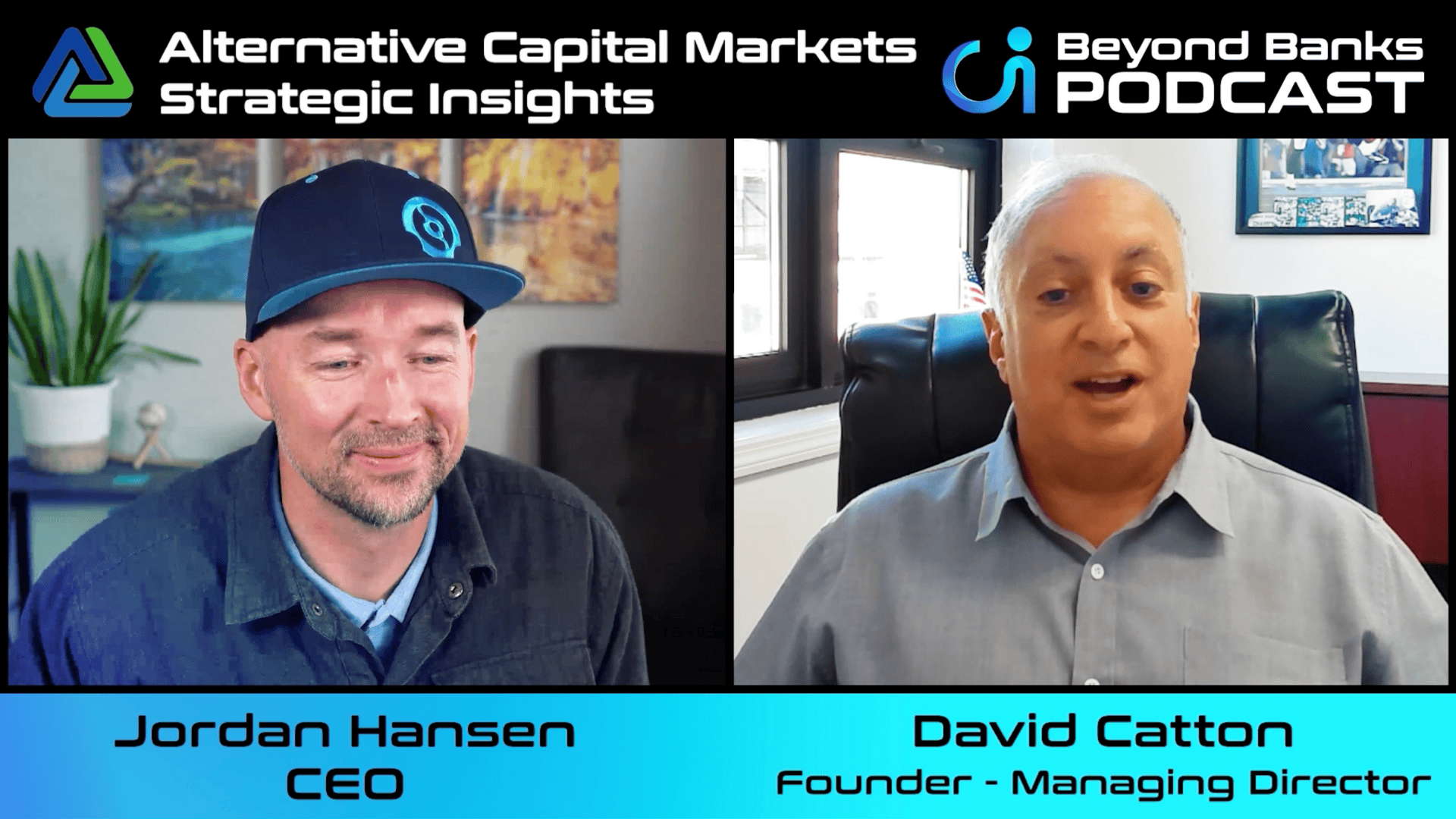
We sat down with David Catton to dissect how a brokerage survives the 2008 crash, the COVID lockdowns, and the current regulatory tightening. It comes down to three pillars: rigorous talent control, protecting lender metrics, and using compliance as a competitive moat.
1. The "No Retreads" Hiring Policy
The fastest way to pollute your deal flow is to hire reps with bad habits. The industry is full of "shop hoppers"—brokers who move from one floor to another, bringing shady sales tactics and high-default merchants with them.
Catton’s strategy is counter-intuitive but effective: Zero retreads.
AFN refuses to hire brokers with prior MCA experience. Instead, they build their sales floor from scratch, training reps on their specific underwriting criteria and ethical standards. This prevents the "churn and burn" mentality that plagues most sales floors and ensures that the paper being submitted to lenders isn't tainted by the desperate tactics learned at lower-tier shops.
2. Protect the Lender’s Conversion Rate or Die
Lenders live and die by efficiency. If an ISO sends 100 files and only 2 fund, that ISO is a liability. It costs money to underwrite a file.
Catton admits that years ago, lenders threatened to cut ties due to eroded metrics. That was the wake-up call. Today, the strategy is pre-underwriting.
Using a proprietary "Lender Matrix," deals are scrubbed before submission.
- The Goal: Ensure the deal fits the lender’s specific "buy box" (credit score, industry, daily balances) before it ever hits their inbox.
- The Result: Conversations shift from "Your look-to-book ratio is trash" to "Send us more volume."
3. AI Sorts, Humans Underwrite
There is too much noise about AI replacing underwriters. That is a fast track to high default rates. Algorithms can read bank statements, but they cannot read character.
Technology should be used for efficiency, not judgment. AFN uses AI to:
- Analyze lead generation data (marketing efficiency).
- Pre-screen bank statements for obvious disqualifiers (NSFs, negative days).
However, the "payer vs. non-payer" determination remains human. You need a human on the phone to sniff out the fraud that a spreadsheet misses. As Catton notes, relying entirely on automation removes the gut check required to assess if a merchant actually intends to pay you back.
4. Regulation is the "Great Filter"
The recent disclosure laws in Texas, California, and New York have sent weak brokerages into a panic.
Smart players welcome it.
Regulation acts as a filter. It weeds out the operators using fake names, shell addresses, and predatory stacking practices. If you are afraid of disclosing an APR or having a physical address on your website, you shouldn't be in the business. For established shops, increased regulation simply clears the playing field of amateur competition.
The Bottom Line
Longevity in high-volume lending isn't about the "hustle." It’s about not wasting time. Don't waste the merchant's time with fake offers, don't waste the lender's time with un-fundable files, and don't waste your own time fighting regulators.
Connect with David Catton:
https://www.linkedin.com/in/david-catton-4136543/
https://advancefundsnetwork.com/
Podcast Transcription
Jordan: Hello everyone, and welcome. I'm here with David Catton from Advance Funds Network. Uh, really glad to have him on and appreciate your time, David, for coming on. Uh, you've been in the industry like we just talked about 18 years now with this specific business, and it's just, it's hard to find people in the industry that had been doing it that long. So I'm really excited to talk to you today. Can you gimme some background on yourself? Sure.
David: Got it.
Jordan: Yeah, go.
David: First of all, Jordan, thanks. Thank you for having me. It's really a pleasure being with you. Pleasure talking with you. And yeah, 18 years, I just, I can't believe that it's 18 years already that I'm, uh, that I'm in this industry.
Uh, I come from, uh, a completely different industry beforehand. I used to be in importer of children's clothing where we had family business, where I was a third generation. Uh, as the market changed and that business sort of went away. I decided to transition and wanted to get out of the apparel business.
Very different business. So at the time I was searching around and I was doing some investment banking with a small firm and some capital raising for different businesses that needed capital. So this was what? 2000? About 2008, 2009. And I was approached by somebody that said, look, I'm looking for some capital for my business.
We do this type of business lending. I said, oh, that's interesting. Turns out it was Steven Scheinbaum at the, at the time, merchant Cash Capital, right? Mm-hmm. And I went, I met with him. I was intrigued by the business and I said, wow, this is really something new and fresh. And I went to some of my banking friends.
I asked them, they said, yes, we're very interested. Uh, he was looking for, at the time, $20 million and I called him back the next day and he said, uh, don't need it anymore. I'm already set. And I'm like, I spoke to you yesterday and you needed the money. Yes. And now you don't need the money. No, I already got it.
I said, well, something. Intriguing about this pieces, and then the next week I was approached by a, a broker down in Florida who said, look, I'm doing brokering in this cash advance business and I'm looking also for capital so I can start doing lending. I'm looking, and I said to myself, you know what? This is something that yeah, really maybe I should look into.
I could, like I said, the time was like 2008, 2009, which was middle of the financial crisis. Nothing was really pumping. Anywhere in business to get started on something, something new would've been difficult. I said, you know what, I'm gonna look into this. I decided to open up a brokerage, small third floor of a walkup, had about three or four people plus myself in there.
Uh, at the time I hooked up with my partner, Douglas had that and decided to give it a go. I'm more of the backend underwriting type of, uh, person, and he's more of the front end sales. Systems type of person and we still look at each other and say 18 years later, we can't believe that we're still doing this.
Yeah, so we have two other uh, uh, partners in our business, Irving Detach and Joseph sas, and they, it contribute fantastic in our business and I'm very proud of what we've built. 18 years to be in any one business is not easy, but. We, I'm glad to say that we've grown the business to have a excellent reputation in the industry, uh, with lenders, with our clients, um, and we've really built it to be one of the leading brokers, one of the leading ISOs that are in the industry.
So something that we're very proud of. I think when you do things the right way and you. Treat everybody with respect, but treat everybody properly. Sort of, I, I, it sounds a little, you know, it sounds a little bit of, uh, patting myself on the back, but sort of the dream rises to the clock and as a result, I think our business is going to be one of the big ones in the industry.
Jordan: That's great. I like, uh, that's inspirational stories. I love talking to people like you, especially in this industry because sometimes they get such a bad rap. And then I, I just, every time I hear people say, oh, it's kind of a shady industry or whatever, I'm just like, you don't know the people. Yes, there are shady individuals, sure. But there's a lot of people like you that are building amazing businesses that are helping out, you know, merchants get what they need that they wouldn't have gotten otherwise. So, uh, I just love to talk and hear these things, but it's,
David: you're right, it's a difficult industry. When I first went into it, and even there were shady. Shady companies and shady characters that I met with a mentor of mine, and I, I asked their opinion. I'm, I'm very, very big into having mentors, asking their opinion, bouncing ideas off. Anybody thinks that they know what all they're crazy. And he looked at me and he said, telling me this a in industry, which is very difficult with shady characters in it then. Set it up, go for it, but be on the up and up.
Jordan: Yeah. And you
David: differentiate yourself.
Jordan: Differentiator. Exactly.
David: I, I still, uh, I'm still very close with them now and we talk about that meeting, that react and look, it's very hard for merchants, clients that are in the industry to really the spreadsheet. There are a lot of shady characters out there, and the industry does have a bad reputation.
I have this conversation very often with people. First of all, somebody that's doing something that's a little shade at them. Why are you doing that? Everybody wants to make money, but make it in a straightforward way, you know, to an honorable way. But let's say when I talk to clients or merchants, and I warn them because it's important that we are straight up and we warn our clients as to what to look out for.
There are a couple of red flags I always tell them to look. Now an example of some of them are number one, due due diligence on the company, on the broker, and on the lender that you're working, that you're talking to. Go to their website, check them out. Red flag number one, is there an address on their website?
If there's no address on their website, B kip, they don't want you to know where they are then that is not somebody that you should be. The name of the person that they're working with, be careful. Is it their real name? And sometimes you can tell when it's not. It's somebody with two first names run for the, yeah.
When we, we don't allow people with fake names to work in our organization. If you wanna have a fake name in our organization, you go fight. So by sauce. You have to. And so, so this our, our clients that need to be able to search out the company and the representative that they're working with, also check into them, look on Trustpilot, look on Google reviews.
Uh, I'm very proud that we have Better Business Bureau, or at a plus many years we have, we're 5.0 Trust pilot with a 1,560 and a hundred reviews. As you know, 5.0. We're very proud of that. We encourage our clients to please help us make the industry legitimate more and get rid of these shady characters and give us good reviews.
Um, these are things that are very important because otherwise you can get tined and it's important that those that are straightforward in the industry really could self-police the industry. There have been talk of regulation and all things like that for many, many years, but at the end of the day, we need to solve.
Jordan: Yeah. So tell me more about your brokerage services. This is something you're proud of, I think, and I wanna know more about it. Do I What? Your brokerage services.
David: So, look, being in the industry for 18 years, we have very strong relationships with pretty much all of the good, legitimate LED that we wanna work with. I don't know, both mostly in the United States, but also international. We, we spend a lot of time and a lot of effort on our marketing and our regeneration. Uh, we have approximately 60 or 70 different reps stationed throughout the country and even internationally that are self-trained by us. That's another thing.
We mm-hmm. This company do not. We, we want to train all of our representatives ourselves. We will not hire any other representative that has already been in merchant cash. We don't want to have anybody in our organization that may have had bad habits from. So we will look for people with the proper personality traits.
Good salesmanship and good sales skills, but we have our own hiring department training, the training staff, about six or seven people that do that. And if somebody, we don't think they're gonna be successful, we tell them, look, early on you are wasting the time. But we provide them with the support. We provide them with all of the tools that they need in order to be successful.
We spend a lot of time and effort on lead generation, legitimate lead generation. And we've been successful in that. We put it all together. We have extremely good processing and systems that we're able to turn things quickly. We all know that speed is the number one aspect of this industry that makes you successful.
Our systems are top notch, the known in the industry to be top notch, and we're able to turn things quickly, good relationships with all the lenders, and that's why we're 5.0.
Jordan: Yeah. And some of our previous conversation, one of our previous conversations you mentioned you are using really advanced technology for your pre-screening. Is there, is there, do you wanna talk more to that?
David: Sure. Um, we, we don't wanna waste anybody's time, not our time, not lender's time, not our web's time. So we do do a prescreening of our, of all leads and all deals that come in. We don't wanna make stuff home. It's something that really is not going to be approved.
Um, we use AI to do that. We use other algorithms that are in our system in order to do that. Um, and it's appreciated by everybody. Uh, our reps. We are very conscious of their conversion rates, both to put the, get the submission in and for funding conversion rates. And we've been years back down that road with different lenders who we, we always hated to have those conversations of, look, your metrics are no road.
It's not worth it for us. You send us so many submissions, we really know which submission and which, which deal is right for which lender. We're very conscious of our conversion rates. I don't think we've had a conversation like that in maybe eight or nine years.
Jordan: Hmm.
David: Yeah. The conversations that we're having with the lenders are send us more.
Jordan: Right.
David: So look, we send the deals that are good for you and we don't waste our time with the be So do you have it preset? I mean, 'cause every lender is so different. You must have preset criteria to be like, okay, this lender we know is gonna be perfect for this kind of deal. And this one is good for these kind. Is that kind of how it works?
David: Absolutely. I mean, we have a lender matrix in our system.
Jordan: Mm-hmm.
David: Uh, the logic of our system will give recommendations based on what they found in the submission, which lenders are the best ones, so that would be most suitable. And, uh, in addition to that, we're using AI in order to, uh. To also fine tune the quality of the deal and also which, which lender criteria we will have to lead the criteria. We use AI in order to determine returns. Got it. You know, there's so much out there that we need to be efficient. Efficiency is very important to everybody, and if you could use technology in order to become more efficient. Then just means there's more money to be made forever.
Jordan: Yeah. So with this technology, how do you feel like it helps you with compliance and kind of what's your, what's your approach to compliance?
David: Uh, compliance in terms of what? Like what kind? Yeah.
Jordan: You know, this is something we discussed about before you felt like you were, this is something you had a strong suit of compliance. I'm not sure if you're speaking more to regulation. Um. But let's talk about that. Like how, how do you feel like with regulation, what are your feelings on the current regulation, especially the one in Texas that just came out, and then the ones going forward? Do you feel like it impacts you very often as a brokerage?
David: Yeah, so we're obviously very on top of all the regulation that the specifics breach each state real licensed. One second. Yeah, no problem. I don't know if you're hearing that. My phone, so sorry about that. Okay. Obviously, we're very up to date with the different regulations and the different criteria of each state.
We are licensed brokers and of California. We adhere to all of the, we're registered with Texas, Virginia, Maryland. I forgot Utah. Mm-hmm. Yeah, weed. We understand all of the criteria and everything that's required as far as, you know, the disclosures. In fact, in the, in the last, uh, broker fair, uh, one of my partners, Irving, gave a whole, uh, in the, in the broker battle, he was asked about that, the disclosures, and gave a fantastic answer for us why it's necessary to, how we do it, how we pitch it, how we explain it to our clients.
Um, a lot of people say, oh, they're afraid of regulation. We're not, we are not afraid of regulation. If regulation is going to weed out bad apples from the industry, we welcome it. And I've had these, I've met with many of the lenders who are involved in the, the defense associations, and they're, frankly, they're urging us to get involved also in those associations on a broker level in order to. Put in place the proper self-regulation dealing with government. We're fine. That it's, I think it's better for the industry. It's better for the client. I'm not, I'm not saying that. Yes, let's go regulate.
Jordan: Yeah.
David: I'm just saying that we're not afraid of it. Mm-hmm. And we're, when you deal with your business in the proper way, you shouldn't, if you are. You should be worried.
Jordan: Yeah.
David: Looking at yourself and saying, maybe I'm doing something wrong.
Jordan: Uh, you mentioned a little bit about technology, but, and you said you're using ai, which is awesome. Where do you think in the next five, 10 years the industry's going, especially with regards to technology and ai? Can you, where do you think, yeah, just give us some thoughts there.
David: I look. As far as technology, I've, I'm an old guy. A lot of the people in the industry are in their twenties and thirties. I'm in my mid fifties. Okay. So I've been around the block a little bit more. I've seen how technology has affected this industry and other industries and. I make it my business to stay on top of technology because I think if you fall behind the curve on technology, you cannot catch up.
Technology moves so quickly that if you decide, ah, I'm gonna stay where I am for the next three years, you won't know what's going on and be at a tremendous disadvantage in the industry. So as AI develops and it's developing so quickly every day, something, I was just looking at another ai uh, platform, uh, the other day, which can help us in our pre underwriting.
And we look in, we, we look into it. If you don't, you're going to be a dinosaur very quickly. So I think. AI and technology needs as as it develops. You're going to see more in terms of what I was saying as far as free underwriting on deals, full underwriting on deals. Look, I'm a very strong believer of person to person, that personal touch as well.
I know that there are other platforms out there that go entirely on technology. I personally think that it's a mistake as as when we do underwriting. I like to, for the technology to bring to me all of that, what they found in order to analyze it. But at the end of the day, there's nothing like putting person to person conversation because there's still that touch of, you need to get on the phone with somebody to size them up to understand if they're legitimate or not to understand if they're, look, there are payers to simplify it, there are payers and there are non-payers.
Jordan: Mm-hmm.
David: The technology can bring you all of that information, but there's nothing like a conversation, uh, talking with your client and understand who's there, right? They're going to be a payer or not payer. I rely a lot on the personal being touchable. So as far as answering your question, technology is going to get sharper.
We're all going to take advantage of it, like I said, in the pre underwriting stage. In the underwriting stage. Um. But there's still that human touch that's needed. Look, there's another area for technology also, which is in the lead generation. You know, we, like I said, we spend a lot of time with effort on lead generation, and you always need to fine tune your searches based on the data that you've collect.
We're using AI in analysis of that data. And as far as which type of market, where we spend our marketing, which is more successful than the other, we use AI to analyze that. So this way we could spend our efforts on the technology, which really bears the most.
Jordan: Yeah. Well, Dave, I really appreciate your time and, you know, having to take the time to come out and, and speak to me. I really impressed with what you've done. Um, okay. Anyway, I just wanted to thank you for your time. Thank you so much for coming on.
David: Jordan. It's really a pleasure. And uh, you know, we've spoken a few times and I think we've developed a relationship. I think the service that you're providing, what you're doing for the industry is also vital and, uh, it's great. And you appreciated, I know by me and I'm sure many of the other people that you've interviewed, and I wish you good luck and, uh. You know, let's, let's all pray for the health of this industry as well.
Jordan: That's right. That's exactly what we want. Yes. Thank you. Okay. Thank you.





.png)





.jpg)


.png)